A wedding timeline should protect the ceremony, food and the parts of the day you care about without turning the wedding into a stopwatch. Here is what a realistic UK schedule actually looks like.
Your wedding will run late.
That is not pessimism. Weddings contain hundreds of moving parts, and most people involved have attended only a handful of them. After more than 500 weddings, I rarely see a bride walk down the aisle at exactly the advertised time. Even fewer first dances begin when the stationery said they would.
A useful wedding photography timeline gives the day a shape without turning it into a stopwatch. It protects the ceremony, food and photographs you genuinely care about while leaving room to enjoy the wedding.
Most established exclusive-use venues use a similar structure. The exact details will change, but this is a realistic starting point for a 1pm ceremony:
| Time | What is happening |
|---|---|
| 10–10:30am | Photographer arrives when venue access begins; preparations and arrivals |
| 12pm | Hair and makeup should ideally be finished; dressing, first looks and wedding-party photographs |
| 1pm | Ceremony |
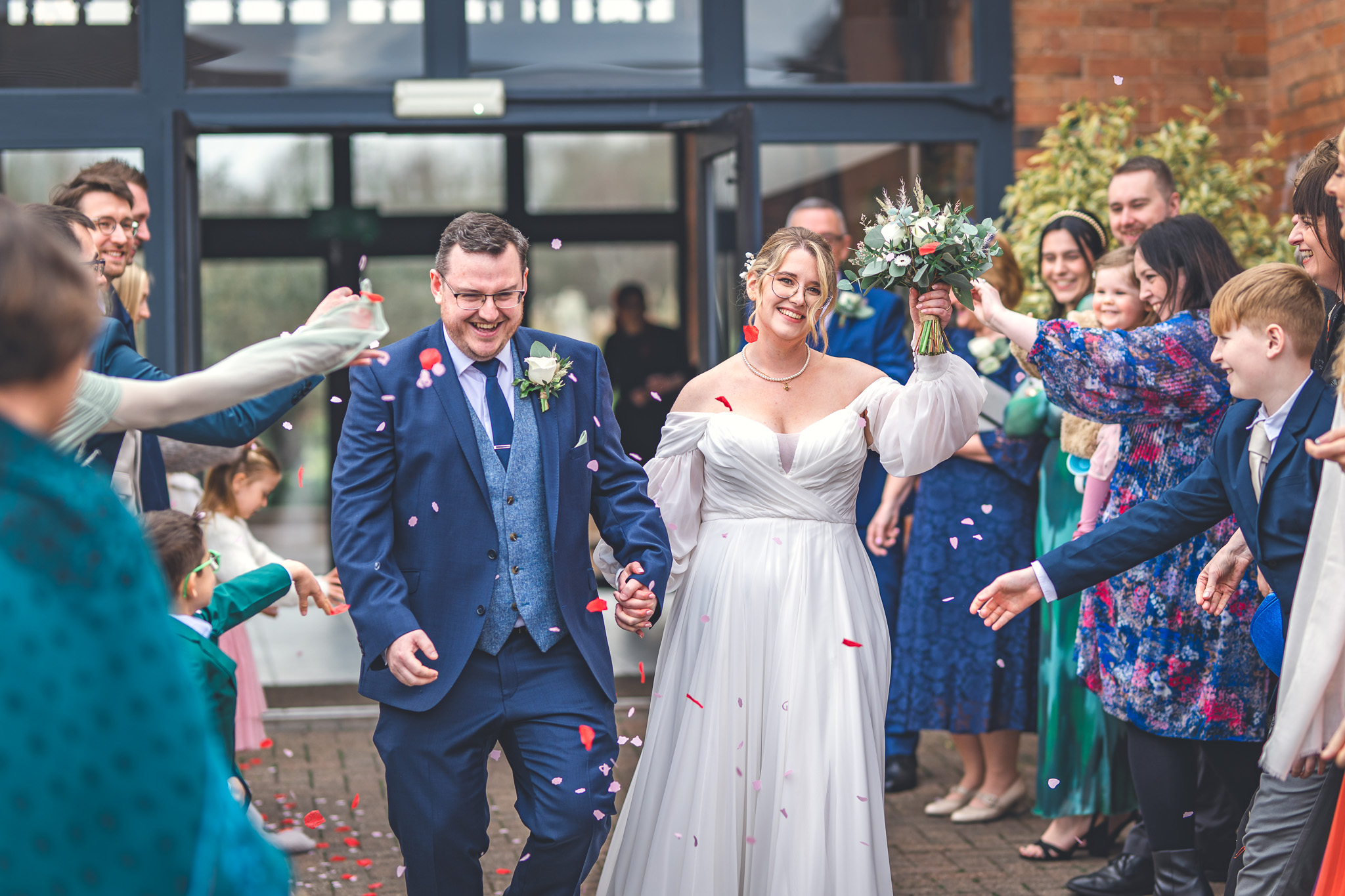
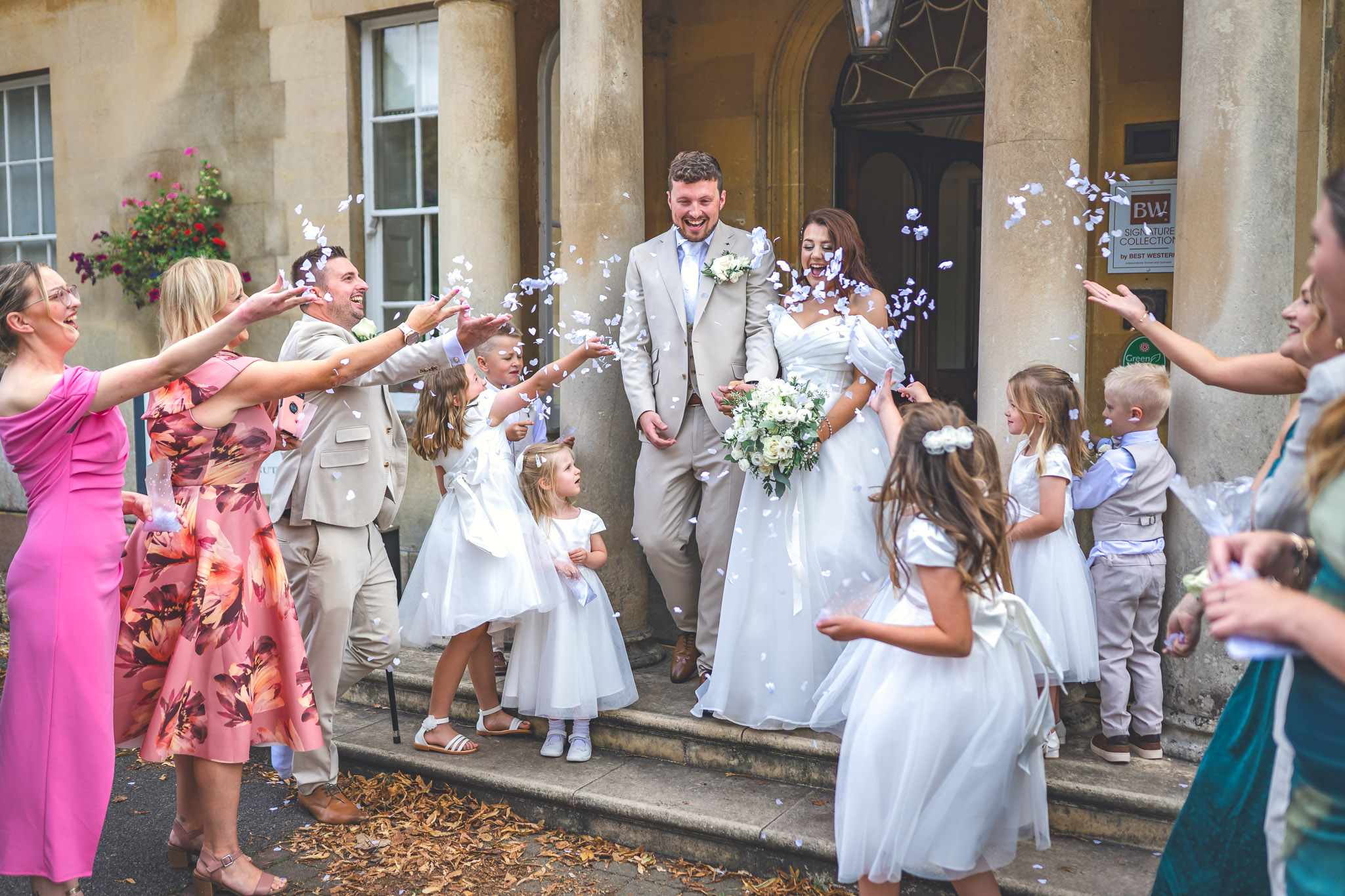
| 1:10–1:30pm | Register photographs, exit, confetti and the everyone photograph |
| 1:30–3pm | Drinks reception, candids and short blocks of family photographs |
| Around 2:50pm | Five to ten minutes of couple portraits while guests are seated |
| 3pm | Wedding breakfast |
| Around 5pm | Speeches |
| 6–7pm | Room turnaround, evening arrivals and an optional second portrait session |
| Around 7pm | Evening reception begins |
| 7:30–8:30pm | Cake cut and first dance, depending on the couple’s plan |
| Around 9pm | Evening food |
This is an example, not an instruction to overrule the venue. It controls catering, room changes and access. Photography fits around those timings. The useful part is the order, not whether the first dance begins at 7:47pm.
I normally use three hours before the ceremony as a starting point when covering both partners’ preparations. Not every wedding needs that long. The number of people, distance between them, travel to the ceremony and venue access all matter. A wedding with several bridesmaids in two locations needs something different from one person getting ready at the venue. Sometimes an exclusive-use venue will not let me in until 10 or 10:30am anyway.
Aim for hair and makeup to be finished around an hour before the ceremony or before you need to leave. That leaves time for dressing, wedding-party photographs, first looks and the inevitable overrun.
If the wedding uses separate locations, take the normal travel time and double it. People need to find cars, load dresses, help children, park and locate the right entrance. Without a second photographer, I may also leave preparations earlier to reach a church before the groom. I rarely work with a second, so I would not use one to prop up an unrealistic route.
For a 1pm church ceremony, arriving at the reception between 2:30 and 3pm may be realistic, with food at 4 or 4:30pm. The service decides the rest. A civil ceremony can last from around ten to thirty minutes. Hymns and readings can push a religious service beyond an hour, while a full Mass can exceed two. Ask the person conducting yours rather than borrowing a duration from somebody else’s wedding.
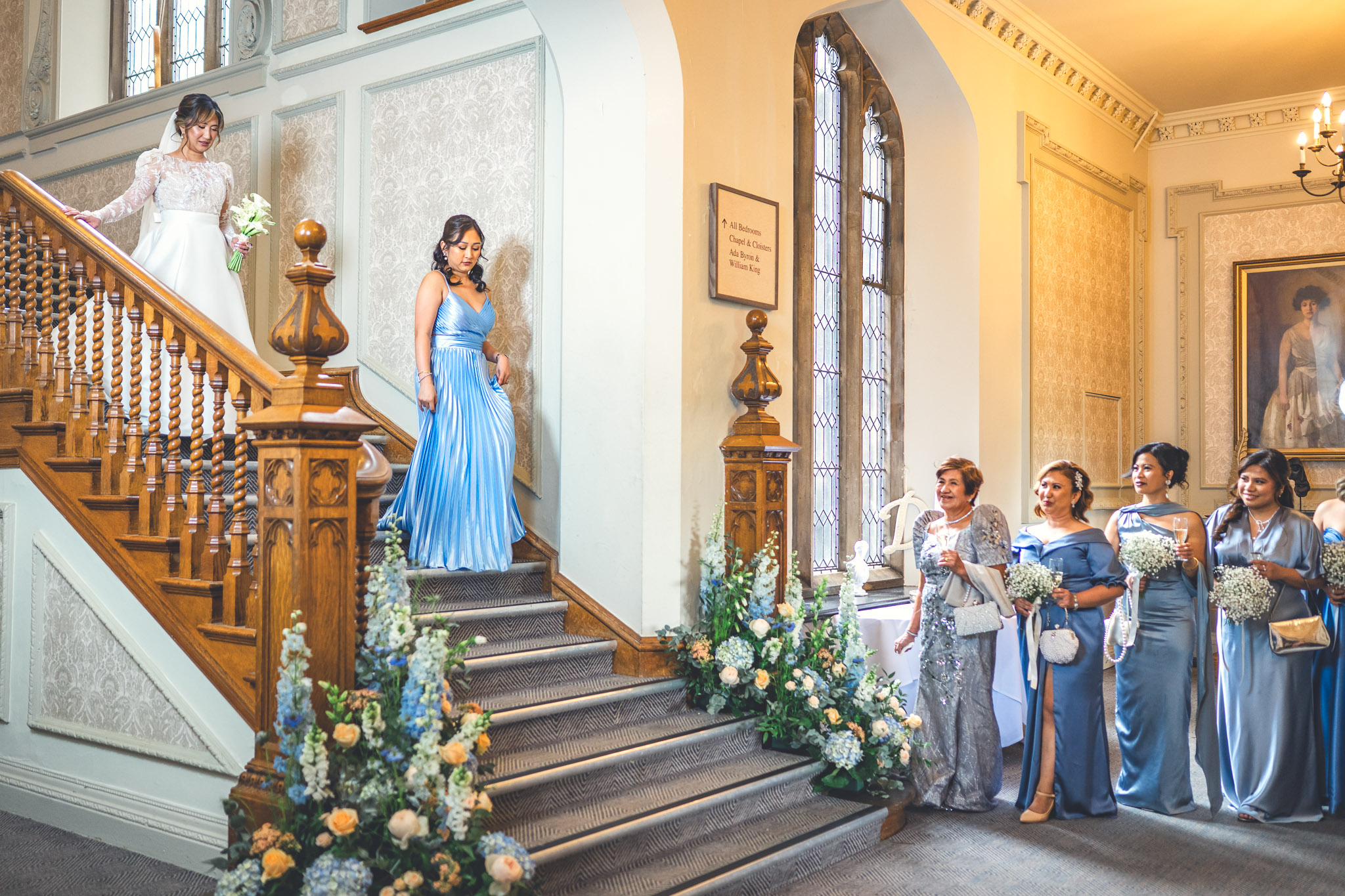
After the ceremony, I begin with a quick selection at the register: the couple, witnesses and any children or dogs involved. Children and dogs become more tired, excited and eventually more feral as the day continues, so earlier is easier.
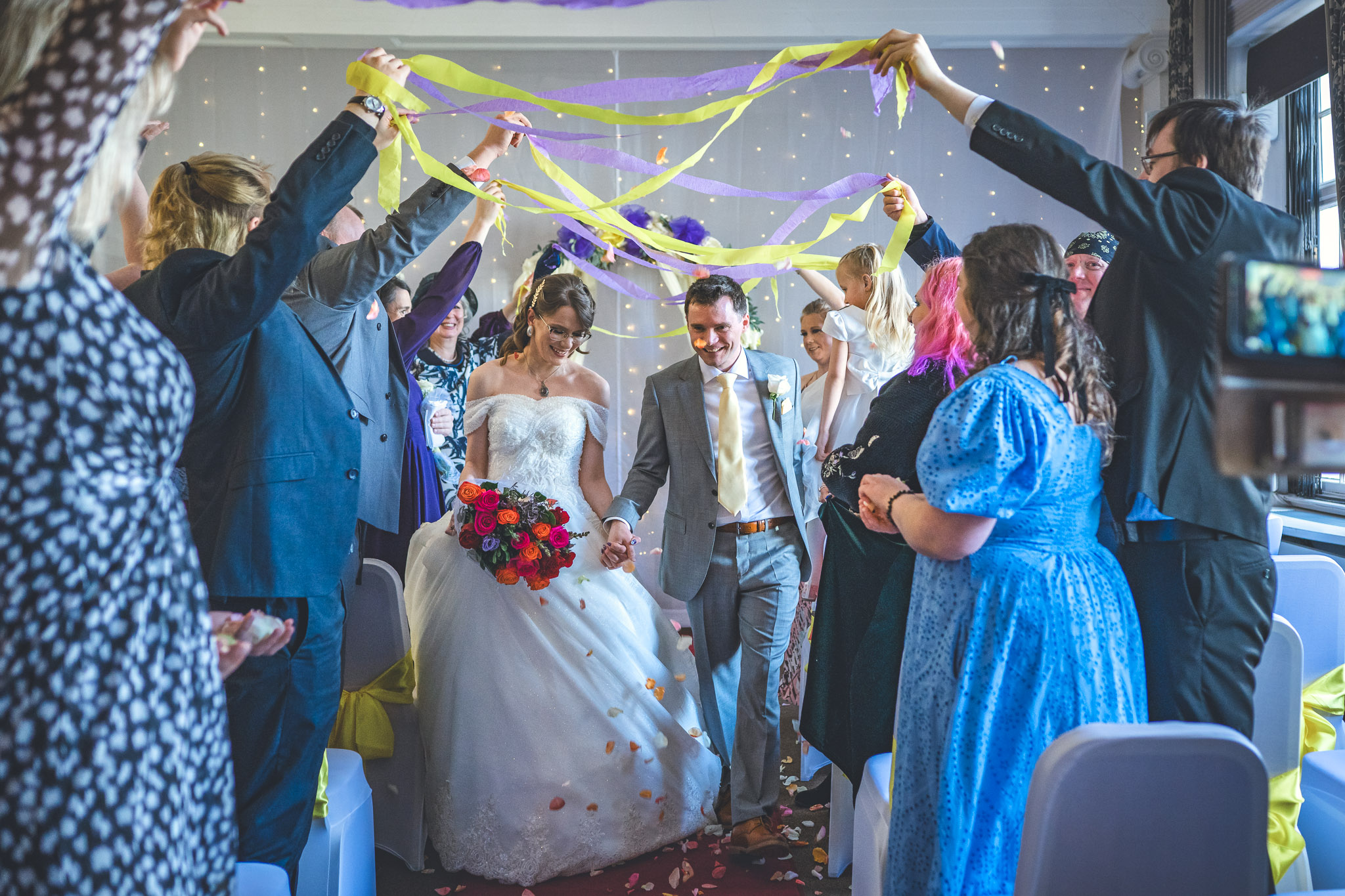
From there, the usual order is the exit, confetti, a photograph of everyone where permission, the venue and weather allow it, then drinks and congratulations. I will often let the couple mingle before beginning planned photographs.
A drinks reception of 90 minutes to two hours normally works well. Much longer and guests risk becoming very drunk before they have eaten. The couple should not spend that whole period being photographed, so I divide the groups into short sections:
My wedding group photograph list explains how many groups are realistic. The wider wedding photography shot-list guide covers the information your photographer actually needs.
I normally make the first couple portraits while the venue seats the guests. That gives us five to ten minutes without removing the couple from their drinks reception. We can use another brief opportunity later if the light, season and wedding make it worthwhile. My guide to when to do your wedding couple portraits covers that in more detail.
A three-course wedding breakfast normally takes two to two and a half hours. Guest numbers, service style and the venue can all change that.
I stop photographing once food is on the table. That goes back partly to etiquette from my military days. Most people hate being photographed while eating, half-eaten food looks messy and nobody wants hundreds of repetitive photographs of guests at dinner.
Coverage does not pause during the meal. If I am at the wedding, the clock is running. This matters at DIY weddings, where couples sometimes book six hours without realising that food service may use two and a half of them.
I recommend speeches after the meal because the chef is cooking to a time and the food needs protecting. My guide to wedding speeches before or after dinner covers the trade-offs.
Afterwards, allow roughly one to one and a half hours for the room turnaround, evening arrivals and entertainment setup. A venue with a separate evening room may need less. The first dance commonly happens between 7:30 and 8:30pm, with evening food around 9pm.
Most couples cut the cake immediately before the first dance. Others cut it before the wedding breakfast and serve it as dessert. Put it where it makes sense rather than letting it control the timetable.
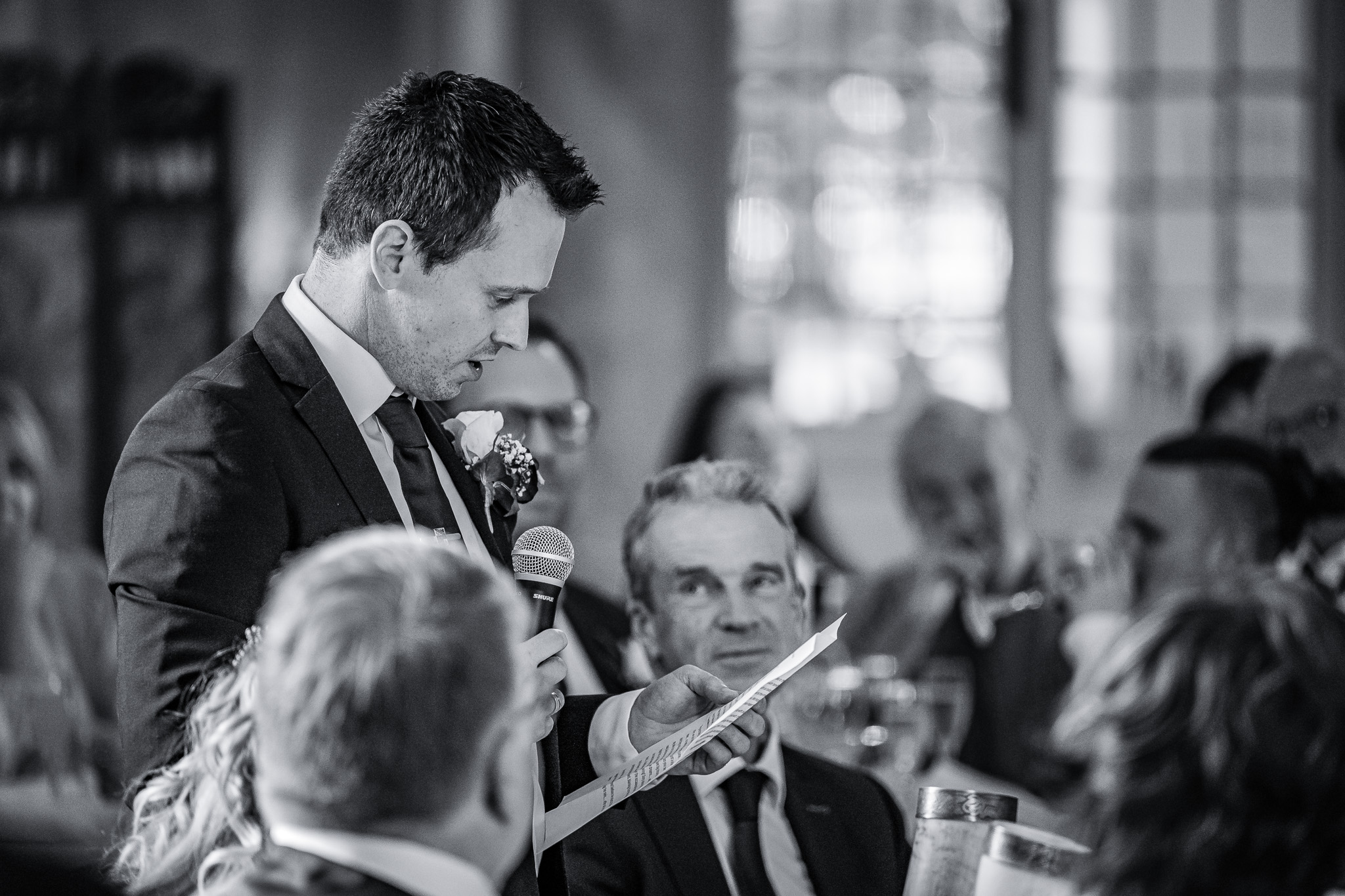
Notice that says when, not if. Do not hyperfocus on a small delay. It is your wedding and people will wait. Being fifteen minutes behind does not need a committee meeting while you should be talking to your guests.
Two timings deserve more protection than the rest:
Do not expect a registrar to wait indefinitely. They often have another ceremony afterwards. I have seen them threaten to cancel while a late bride was still having finishing touches. Being five minutes late is common. Treating the appointment as infinitely flexible is risky.
Sit down for food when the venue asks. The chef is cooking to a planned service time. If photographs, entertainment or speeches delay the meal, the food can become burned, dry or chewy.
Guests will not remember that the photographs finished seven minutes early. They will remember your wedding as the one with the inedible food.
I will protect the meal rather than insist on completing another photograph before everybody sits down. Anything genuinely important can normally be revisited later.
From October to March, consider holding the ceremony between 12 and 2pm if you want daylight afterwards. Any later and you risk emerging into darkness, particularly when the weather is poor.
That is fine if an evening atmosphere is what you want. It just needs to be intentional. Copying a summer schedule for a winter wedding can leave most of the daylight before your guests are present.
In summer, portraits can move away from the harshest part of the day and into the evening. On high-summer days it can still be light at 9:30pm. The precise opportunity depends on the month, weather and venue, so I use short optional windows rather than promising a sunset at a fixed time.
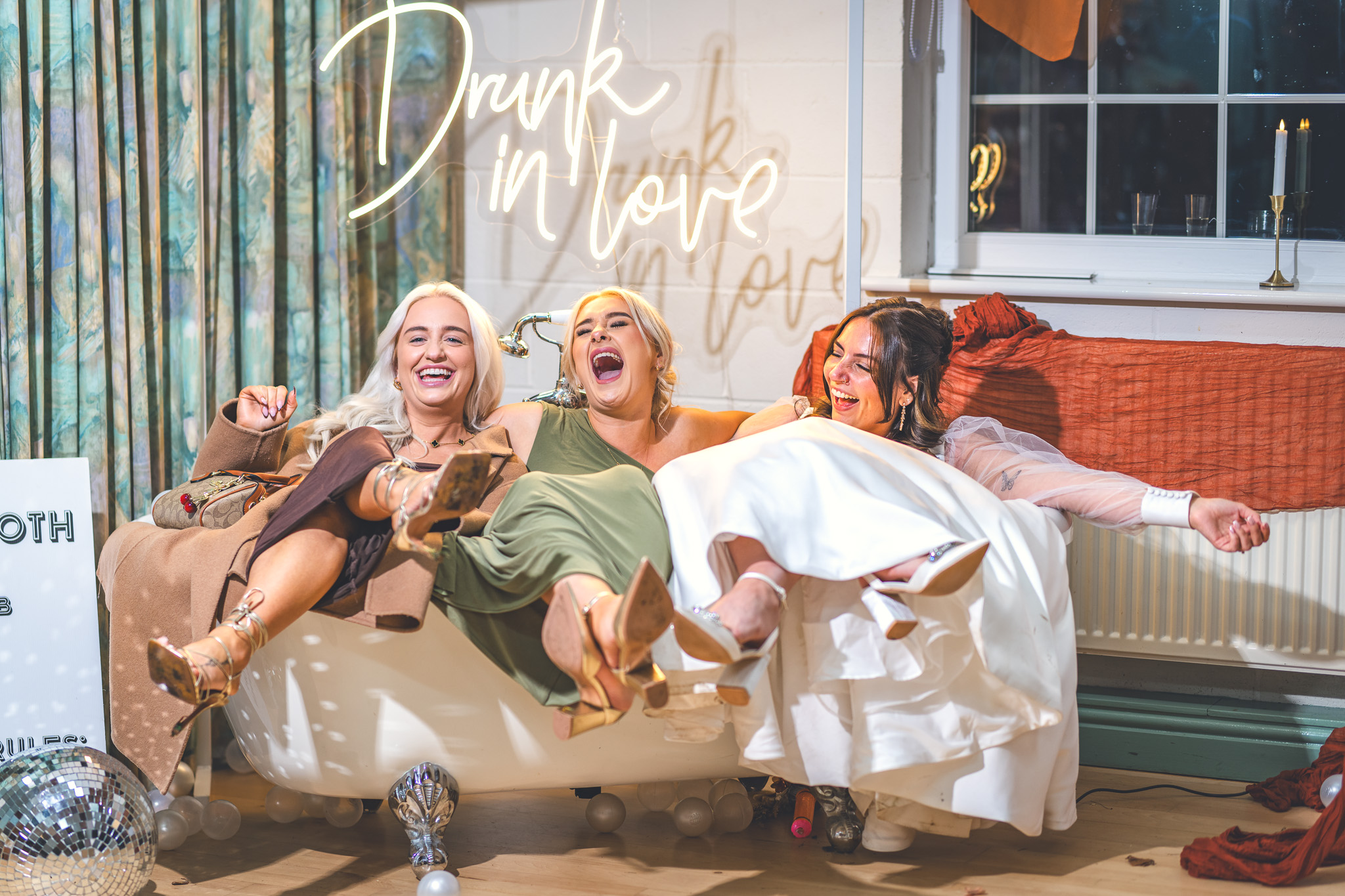
I do not split hairs over ten or fifteen minutes, but if a 6pm finish becomes 7pm, we need to discuss additional payment.
Other suppliers may leave at their contracted time because they have childcare, transport or personal plans afterwards. They are not automatically available for another hour.
If you think you need a photographer for six hours, book seven. My guide to whether you need a wedding photographer for the whole day helps you compare the parts of the wedding with the hours available.
Most exclusive-use venues know how to run a wedding schedule. Let them. For a DIY wedding, ask experienced suppliers to sense-check the plan.
You can have too much padding, so I would not add arbitrary empty hours between everything. Experienced professionals should not need them.
The more common mistake is filling every natural gap with an activity. Most guests are happy with food, a drink and time to speak to family they may not have seen for years. They do not need singing waiters, hour-long speeches and entertainment in every available space unless those are things you genuinely want.
That is how a timetable becomes borked. A five-minute delay in the morning becomes thirty minutes by the evening, and an overcrowded schedule becomes harder to recover.
Choose what matters, protect the ceremony and food, and let the quieter parts exist. Those unplanned conversations are not gaps in the day. They are the day.
If you would like me to help you choose coverage around the wedding you are actually planning, send me your date, venue and rough timings.