Should Wedding Speeches Be Before or After Dinner?

POSTED — 25 May 2026
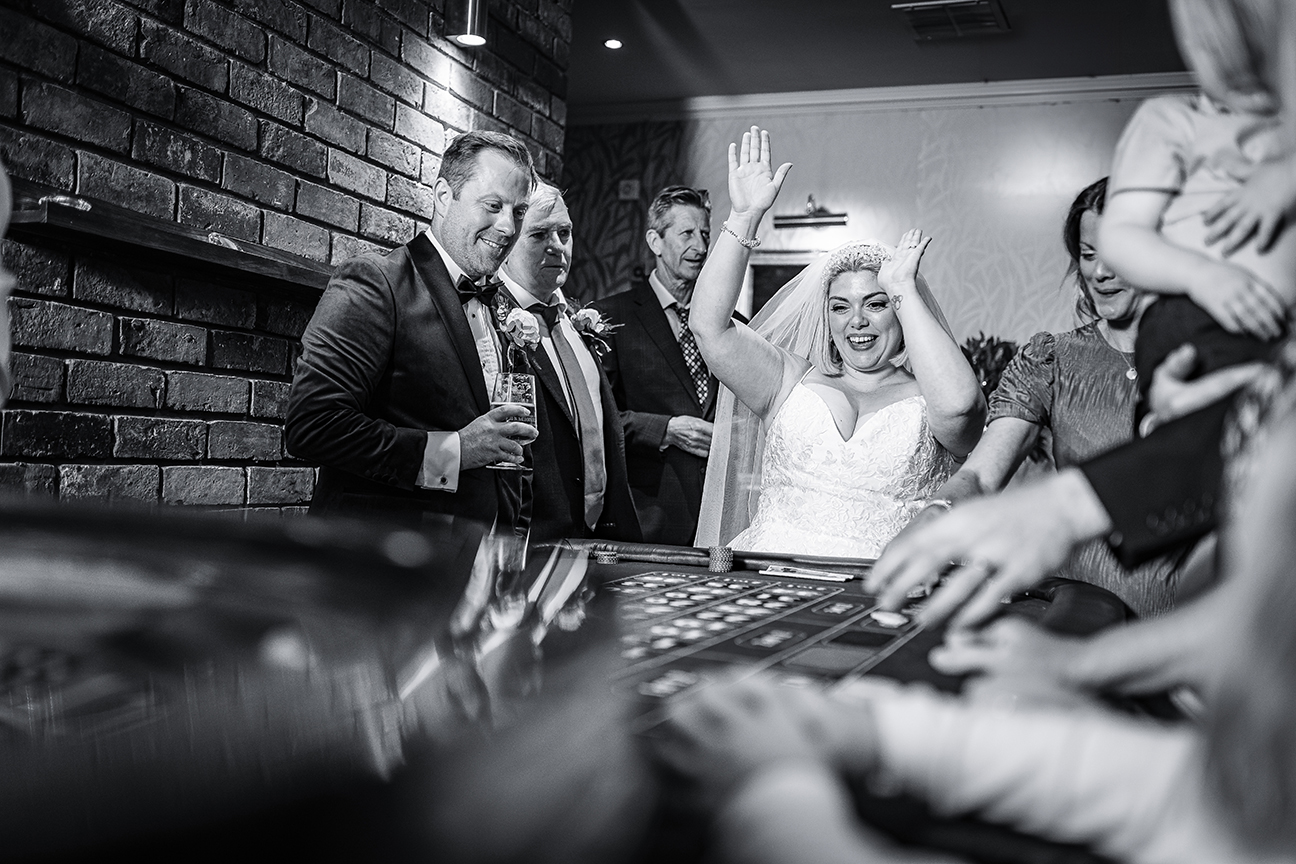
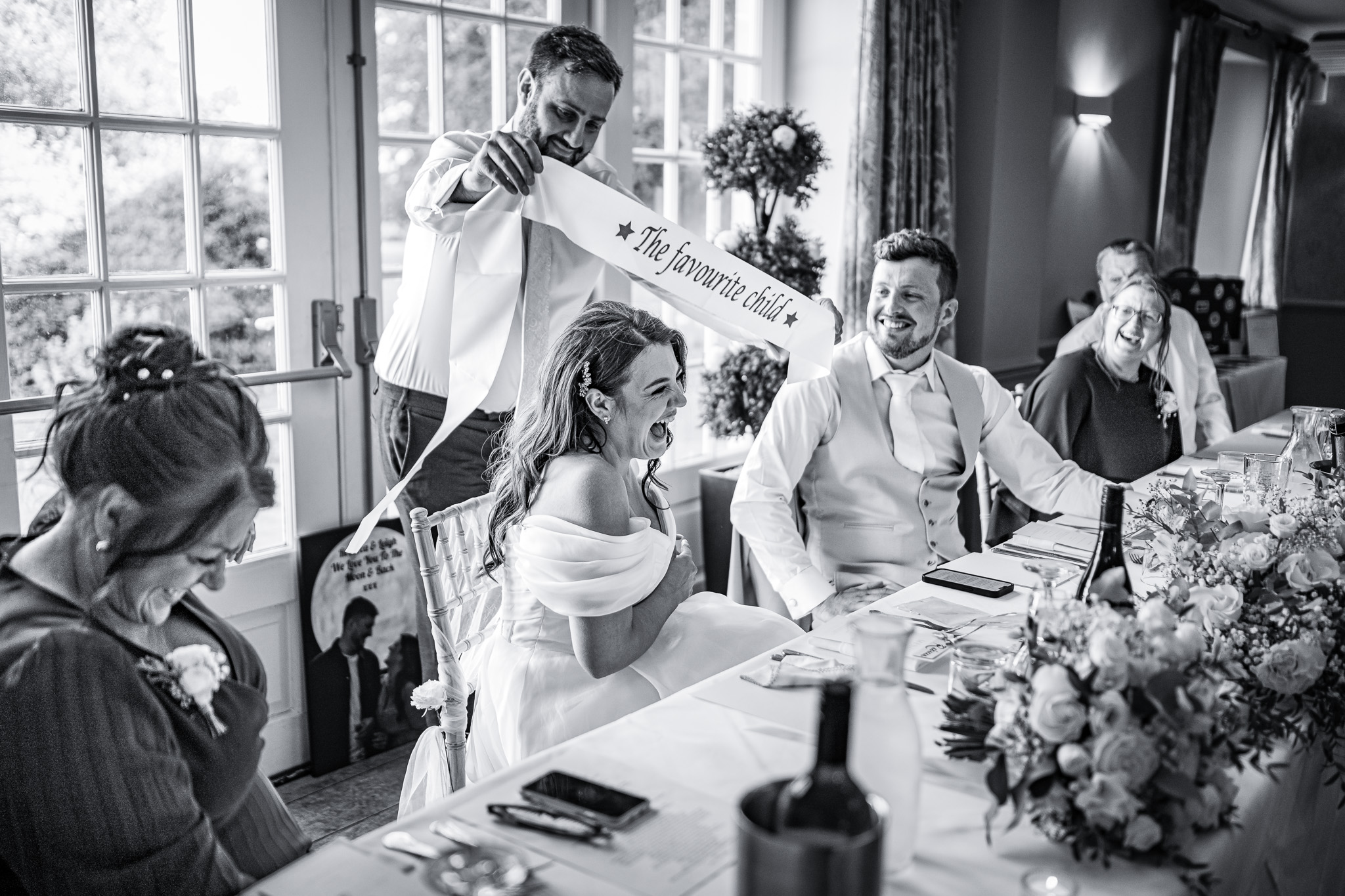
Bride laughing as a wedding speaker holds a favourite child sash above her

For most weddings, I recommend having the speeches after dinner. Your food can be served when it is ready, your guests will be more relaxed and nobody has to endure a 45-minute best-man speech while wondering what has happened to their chicken.
Planning Advice — Speeches before or after food?
There are exceptions, particularly if you are having a buffet, barbecue or food trucks rather than a traditional three-course wedding breakfast. If your meal is being cooked for a particular serving time, however, speeches introduce an enormous amount of uncertainty.

I have photographed more than 500 weddings and seen speeches handled in just about every possible way. Some have been brilliant. Others have continued for so long that I have watched the life drain out of the guests’ eyes.

Here is what I have learned.

Why wedding speeches usually work better after dinner

The most important reason has nothing to do with photography. It is about protecting the food you have paid for.

A wedding venue’s kitchen works towards a particular serving time. The chef knows when everything needs to be cooked, plated and taken into the room. Speeches are far less predictable.

Someone who has promised to speak for five minutes can easily continue for 20. One story leads into another, a surprise video appears and the carefully planned schedule gradually disappears. Meanwhile, the food is waiting in the kitchen.

If the meal suffers, it will not matter how funny the best man’s closing joke was. Your guests will remember waiting too long to be fed or being served dry chicken because the speeches ran beyond their allocated time.

Hungry guests are not a particularly generous audience either. Many will have eaten very little before the wedding because they expect a substantial meal later. Once they sit down for the wedding breakfast, they naturally assume that food is about to arrive. They might listen happily for the first ten or 15 minutes. Their enthusiasm will begin to disappear if they are still waiting an hour later.

I photographed one wedding where the speeches before dinner lasted approximately an hour and a half. By the end, the guests had completely disengaged. I could also hear how unhappy the chef was because the meal had been held considerably longer than planned.

At another wedding, the best-man speech lasted for around 45 minutes. After about 20 minutes, guests began talking among themselves. Whenever the speaker paused, there was an almost audible sigh of relief. When he continued, people genuinely started tutting.

Once the room responds to every pause by hoping you have finished, it is probably time to sit down.

After dinner, everyone has eaten, relaxed into the day and possibly enjoyed a glass of wine. The speakers may feel more comfortable and the audience is normally friendlier. Your jokes may not actually become funnier, but fed guests tend to be more generous with their laughter.
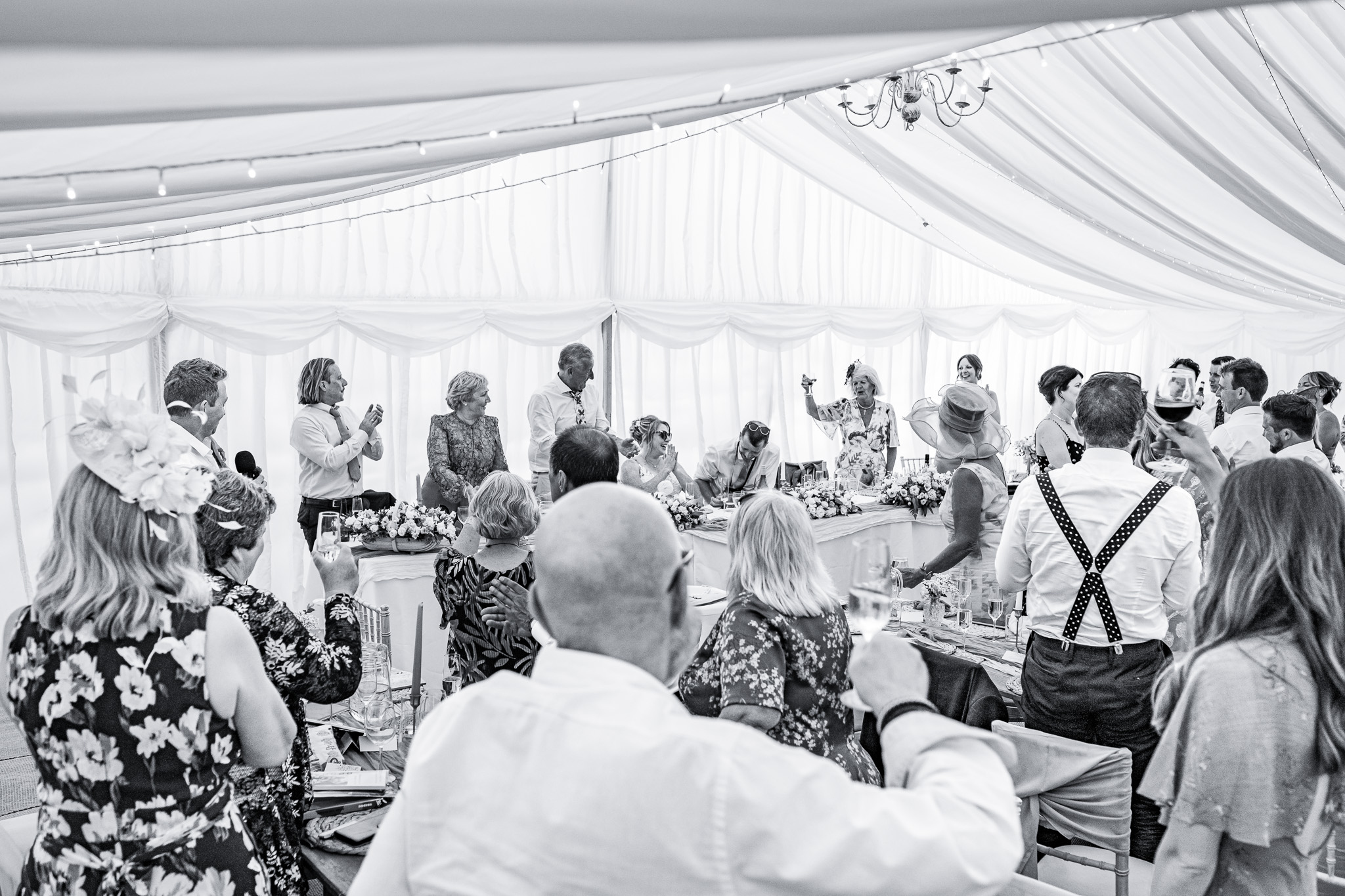
Wedding guests raising their glasses during speeches in a marquee

When speeches before dinner can work

Before dinner is not automatically wrong. It can work well when the speeches are genuinely brief, the catering is flexible or somebody is so anxious about speaking that they will not enjoy the meal while waiting.

A buffet, barbecue or food-truck wedding does not always depend on every plate leaving a kitchen at exactly the same moment. That gives you more room to choose the order that suits the day. Speak to the venue or caterer before fixing the timetable because they will know where that flexibility ends.

If you choose speeches before a time-sensitive meal, give every speaker a clear limit and make sure they practise aloud. Do not build the schedule around three five-minute speeches and simply hope nobody arrives with 14 pages of material.

One useful compromise is to have a very short welcome before dinner, then save the longer speeches until afterwards. Somebody can thank everyone for coming, explain what is happening next and allow the kitchen to begin service without delay.
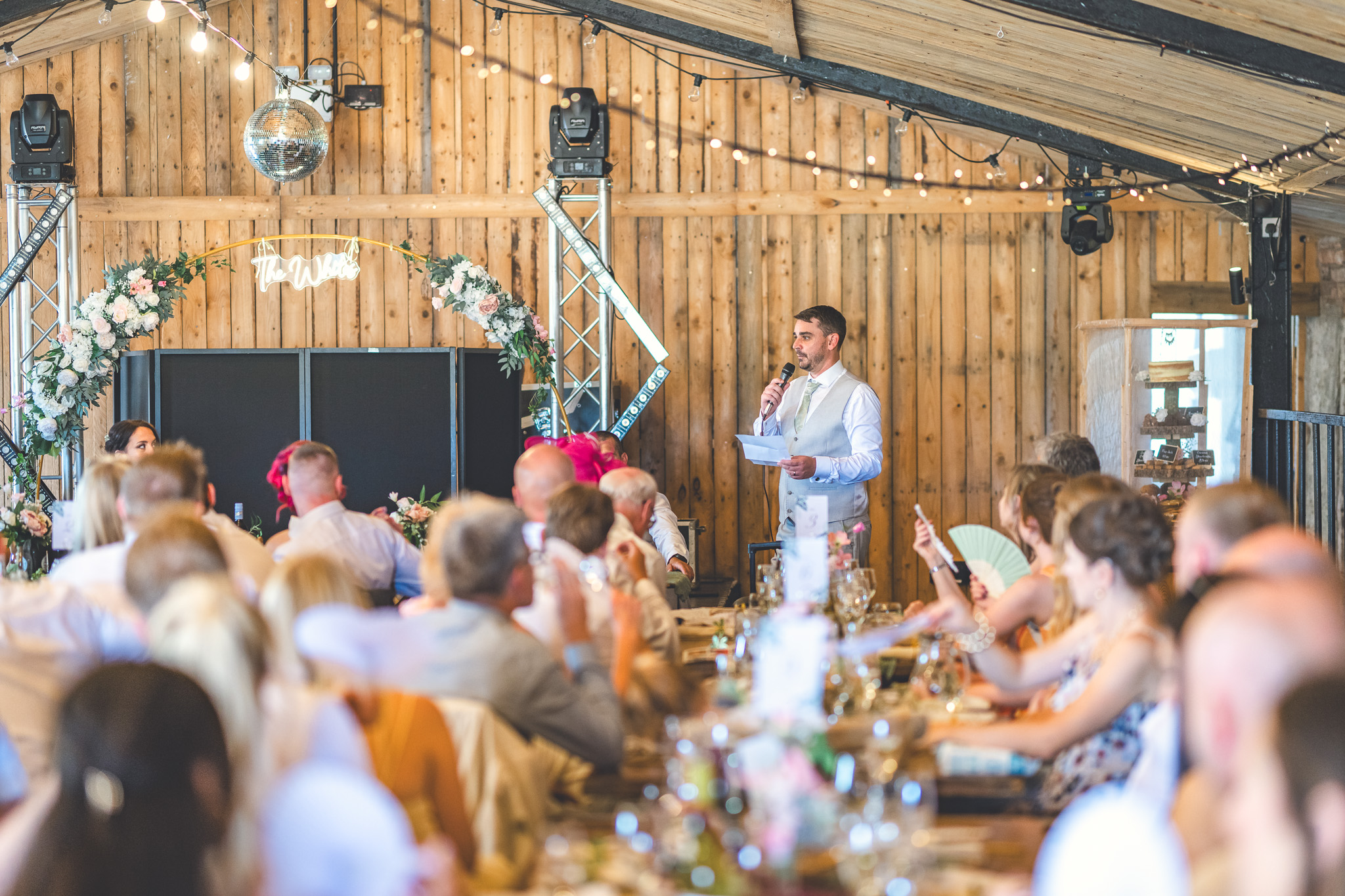
Groom delivering a wedding speech to guests seated inside a wooden barn

Are speeches between courses a good compromise?

In my experience, speeches between courses are the least reliable option.

They introduce uncertainty into every part of the wedding breakfast. If a speaker runs over, the next course waits. If the food is ready first, it may have to be served while somebody is still speaking. Guests then have a hot plate in front of them while being expected to listen rather than eat.

The meal also becomes stop-start. Tables are cluttered with plates, cutlery and unfinished drinks, waiting staff need to move around the room and nobody is quite sure whether they should be listening, eating or visiting the bar.

This is normally the only natural pause in a full wedding day for photographers and videographers too. We do not generally photograph people eating because nobody has a particularly flattering chewing face. The meal gives us time to eat, back up the work and reset before the evening. That should not dictate your timetable, but speeches scattered between courses remove that pause and make the day harder to predict.

If the speeches are one of the last parts of the day you want photographed, make sure they fit comfortably inside your coverage. My guide to whether you need a wedding photographer for the whole day explains how meal timings and delays affect what can realistically be included.
Do We Need a Wedding Photographer for the Whole Day?

How long should wedding speeches last?

I would aim for approximately 20 to 30 minutes in total.

Depending on how many people are speaking, give each person around five to ten minutes. More importantly, ask them to practise the speech aloud and time it.

Reading silently is not an accurate way to measure a speech. Speaking includes pauses, laughter, interruptions and the moment somebody loses their place. Something that looks like five minutes on paper can become considerably longer in the room.

Speeches can be too long, but they can rarely be too short. I have never heard a wedding guest complain that the speeches finished too quickly. I have watched plenty stop listening because they continued for too long.

An hour spent listening to somebody speak is also an hour of the wedding that you cannot spend with your guests. You are not outside enjoying the weather, listening to the musician you have paid for or simply experiencing the day.

The wedding will pass quickly enough without somebody claiming an hour of it because they could not edit their best-man speech.
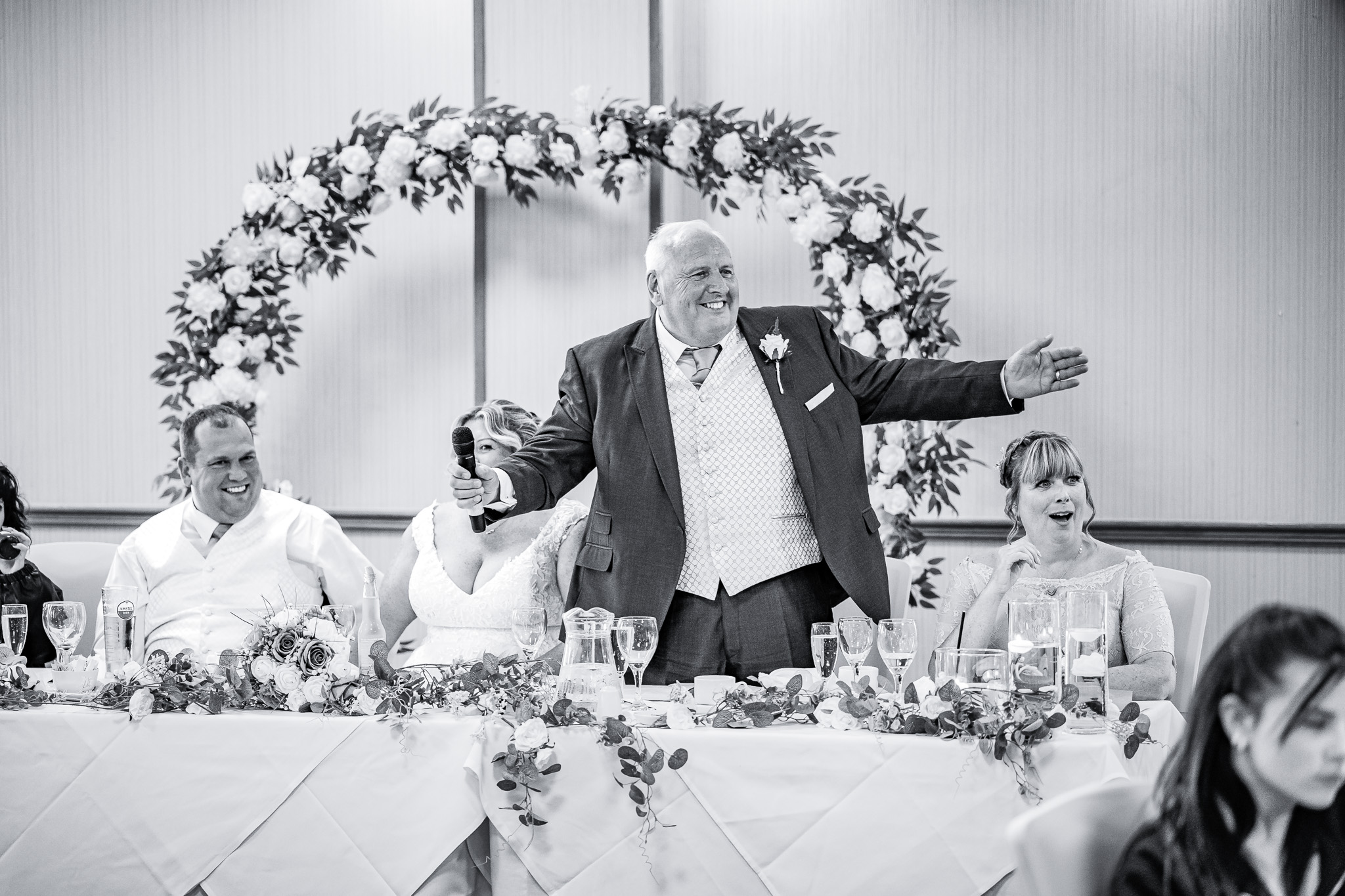
Wedding speaker addressing the room as the newlyweds and guests react at the top table

What if somebody is too nervous to enjoy dinner?

Public speaking is intimidating for plenty of people. If someone is genuinely anxious, moving their speech before dinner may be the right decision. Just keep it short enough that solving one person’s nerves does not create a problem for the kitchen and every hungry guest in the room.

It is also worth remembering that this is probably the most supportive audience they will ever face. The people in the room are there because they care about the couple and want the speaker to succeed.

I have seen people lose their place, stumble over their words and become too emotional to continue when somebody who could not be there was mentioned. I have never seen the room turn against them. People give them encouragement and the time they need.
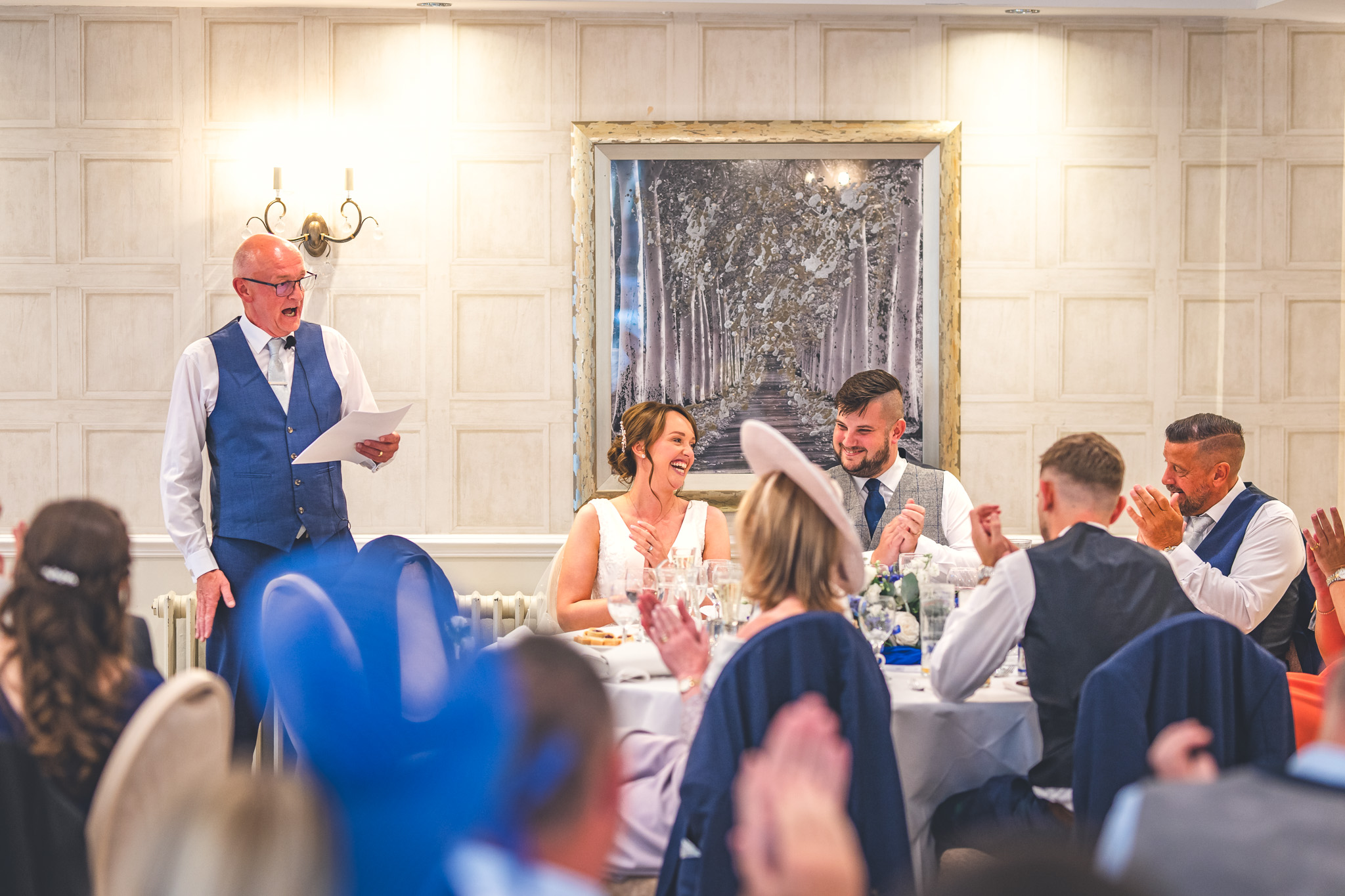
Bride laughing and guests applauding as an older man delivers a wedding speech
A wedding speech does not have to become a ten-minute performance. At its simplest, you only need to do three things:

1. Thank everybody for coming.
2. Raise a toast to those who cannot be there.
3. Say something honest about the person you have married.

That can take 30 seconds and still be a perfectly good speech.

Something I carried with me from my military days is the simplest advice for speaking in front of a group:
Stand up.
Speak up.
Shut up.
Get to your feet, make sure people can hear you, say what you came to say and sit back down.


Do you have to have wedding speeches at all?

No.

There are no rules on a wedding day.

Many traditional expectations have gradually fallen away, and that is probably a good thing. It is your wedding, so do what feels right for you rather than building the day around what other people think you ought to include.

There is no rule saying speeches belong only to the father of the bride, groom and best man. There is no rule saying only one of you can speak, either. If you both want to say something, you both should.


If you do not want speeches, do not have speeches.

 
If you do not want a first dance, do not have one.


If you do not want a wedding cake, spend the money on something you will actually enjoy.


If you want to wear pink boots, wear those bad boys.


The only thing I would suggest is standing up at some point and thanking everybody for coming. Some guests may have travelled a long way to celebrate with you. They are there because they love you and want to share the day with you.

You do not need a carefully written speech or ten minutes of jokes. Just acknowledge them and say thank you.


You can find more straightforward wedding planning advice based on what I have seen work across more than 500 weddings.
Planning Advice
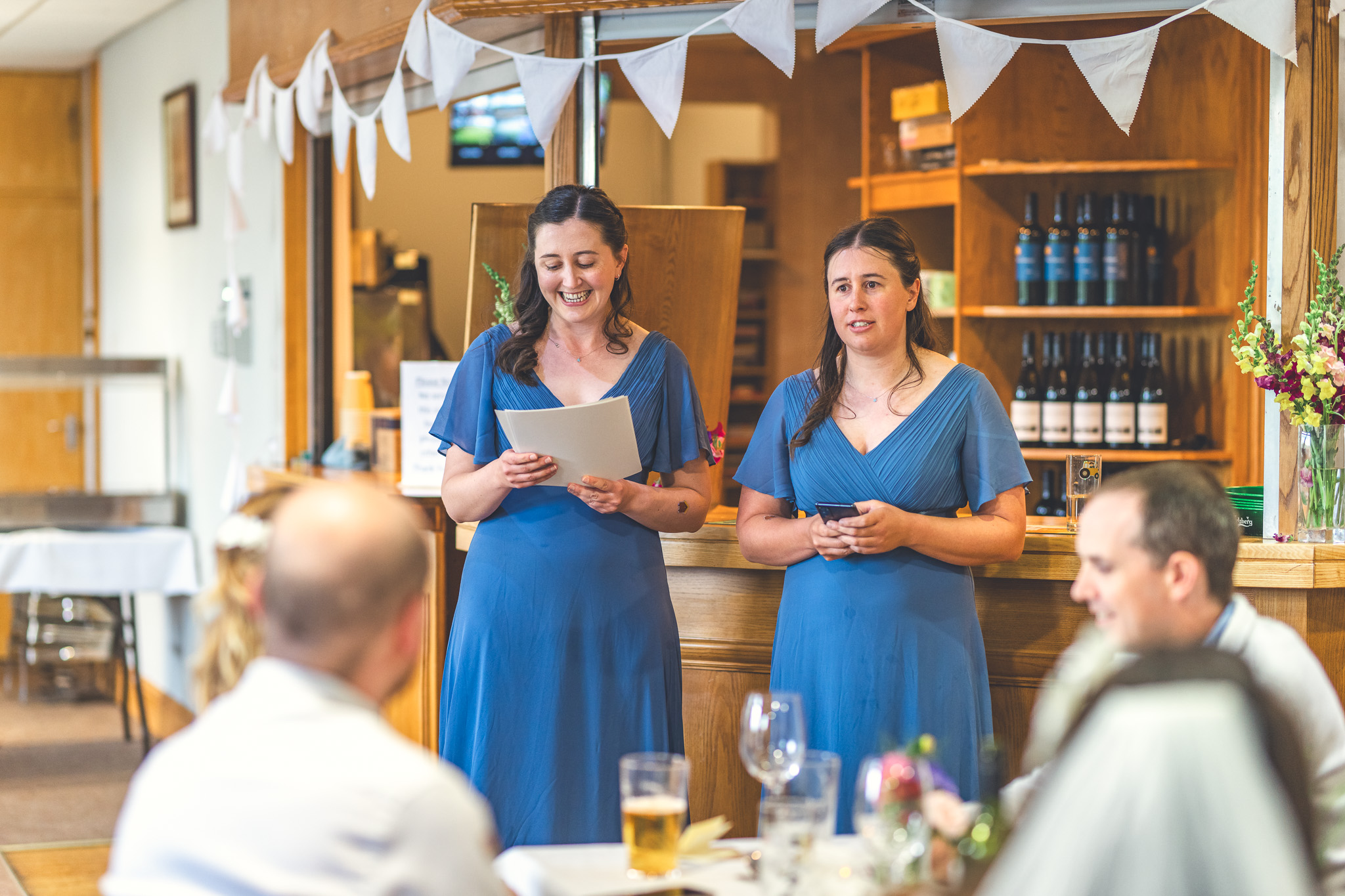
Two women in blue dresses giving a wedding speech together at the reception

So, should wedding speeches be before or after dinner?

My preferred order is:

1. After dinner: the safest option for the food and usually the best atmosphere.
2. Before dinner: workable when the catering is flexible or a speaker is genuinely anxious, provided everyone keeps it brief.
3. Between courses: the option I would recommend least because it disrupts both the meal and the speeches.

If you are having a three-course sit-down meal, let the chef serve it before anybody starts speaking. If you are having a barbecue, buffet or food trucks, there may be considerably more flexibility.

Ultimately, I cannot decide how you should arrange your wedding. I can only explain what I have watched work well and what I have seen go badly wrong.

Whichever option you choose, keep the speeches focused, ask every speaker to practise aloud and give them a sensible time limit. Your guests would always rather finish wanting a little more than spend the final 20 minutes wondering whether it would be rude to start eating the table decorations.

If you are still working out how the speeches, meal and photography fit together, send me the rough timetable. I will tell you honestly what fits and where the compromises begin.
Check Availability