Nobody books a wedding photographer expecting them to become ill. It is still a sensible thing to ask about before trusting somebody with a day that cannot be repeated.
Photographers are human. We can become ill, break bones, have family emergencies or be involved in accidents like anybody else. The reassuring answer is not, “I never get ill.” It is knowing that your photographer has already decided what happens if they genuinely cannot be there.
You pay a professional for more than the person holding the camera. You are also paying for the planning, equipment, insurance, backups and professional relationships that sit quietly behind the service. You will probably never see most of them being used. That is rather the point.
Across more than 500 weddings, I have never missed one because of illness, injury or an emergency.
That does not mean I believe I am indestructible. Twelve years in the military gave me a fairly high threshold for discomfort and taught me how to keep functioning when a day becomes physically demanding. A few years ago, I photographed several weddings with a slipped disc by supporting my back with a weightlifting belt and adapting how I moved.
The belt was not especially subtle, but the wedding still received the photography that had been booked.
Feeling rough, having a minor injury or waking up tired would not make me abandon somebody’s wedding. I would have to be genuinely incapable of completing the work safely and to a professional standard before I activated the contingency.
That threshold is high, but it is not a plan by itself. “I have never missed a wedding” can be reassuring. “I have never missed one, therefore I do not need emergency cover” is complacent.
The first thing I would do is contact the couple directly. I would explain what had happened, reassure them that the contingency was already being activated and keep them informed while I arranged suitable cover.
They would not be left to post desperately in a local Facebook group or find a photographer themselves on the morning of their wedding.
I have five nominated contingency photographers. They are all full-time professionals with insurance, comparable equipment and the experience to take over a wedding at short notice. I would only nominate somebody whose ability I considered equal to or greater than my own. Quite a few of them normally charge more than I do.
If none of those five were available, I am a member of the British Institute of Professional Photography, the Society of Wedding and Portrait Photographers and the Guild of Photographers. Those wider professional networks give me another route to find and vet a qualified, insured full-time photographer at short notice.
My contract promises that reasonable efforts will be made to find replacement cover. It does not make an impossible guarantee that another photographer can materialise in every conceivable situation.
If my partner went into labour the day before a wedding, I would have time to start making calls. If I crashed my car 20 minutes before the ceremony and left in an ambulance, the chances of getting another professional to the venue before the entrance would be very different.
A real contingency recognises both situations instead of making a promise that reality cannot always keep.

I would not choose somebody merely because they owned two cameras and happened to be free.
The replacement would need to be an experienced full-time wedding photographer, properly insured and equipped to work through the entire booking. They would receive the complete job sheet, including:
They would know what had actually been booked, not just the ceremony time and postcode.
No two photographers see a wedding in precisely the same way. Another professional may compose a photograph, anticipate a moment or move through a room slightly differently from me. I would be honest with the couple about that.
However, a very good photographer with a slightly different eye is considerably better than asking a couple to find somebody, anybody, a few hours before they get married.
No. The replacement would be paid for their time and would send the RAW files back to me. I would select and edit the photographs in my established style, build the gallery and manage the delivery as normal.
The couple would continue dealing with me. They would not be handed to an unfamiliar business or left wondering who was responsible for their photographs after the wedding.
If emergency cover cost more than I had allowed, I would absorb the difference. Several photographers within my contingency network charge more than me, but my emergency would not become an unexpected bill for the couple.
This is an important question to ask any supplier who intends to use a replacement. Who remains responsible for the agreement, communication and finished work once the substitute has attended?
I have never needed another photographer to take over one of my own weddings, but I have provided emergency cover for somebody within my professional network.
I received less than 48 hours’ notice. The original photographer sent me the job sheet, the couple’s first names, the start time and the location. It was a venue I had never photographed before, so I arrived early, familiarised myself with the surroundings and worked out how the day would flow.
The couple had already been told that I would be attending. When I arrived, I reassured them about my experience and made them comfortable using my usual mixture of self-deprecating jokes and dry humour. Their photographer changing at short notice was already enough disruption. I did not need to behave as though their wedding morning had become a crisis.
After the wedding, I did not post the memory cards. I drove them to the original photographer’s house and handed them directly to their partner. The couple had already experienced a last-minute change, and I hated the idea of adding even the small possibility that their photographs could be lost in transit.
The original photographer then remained responsible for editing, delivery and their relationship with the couple.
That experience matters because my network is not a list of names added to a contract to make it look reassuring. I have seen the handover operate from the replacement photographer’s side and understand what another professional would need from me.
If I had already completed part of the coverage, I would preserve, edit and deliver everything photographed up to that point. I would make reasonable efforts to arrange somebody to take over the remaining hours.
If that was not possible, my contractual position is that any refund would be proportionate to the coverage that could not be provided. If I could not attend at all and no suitable replacement could be found, the couple would receive a full refund of everything paid, including the booking payment.
My partner also knows how to activate the contingency if I were physically unable to make the calls myself. My upcoming wedding information is kept in order, and she knows where to find the job sheets, client details and nominated photographers.
The system cannot depend entirely on the incapacitated person being able to use it.
Being unable to spend a full day photographing a wedding would not necessarily prevent me from sitting at a computer and completing the edit. It would take a prolonged and serious incapacity before I passed unfinished editing work to somebody else.
If that ever became necessary, my partner has full access to my image libraries. She knows how to identify unfinished weddings and pass the work securely to trusted professionals for completion. Couples would not be trying to retrieve photographs from a business nobody else could access.
The photographs themselves are protected at several levels:
Those retained cards are only formatted and returned to the working pool once the finished gallery has been delivered.
Camera bodies, lenses, flashes, batteries and memory cards can all fail. Over the years, I have replaced all of them. No couple needed to know about most of those failures because redundancy is built into how I work.
I take multiple camera bodies and overlapping lenses to every wedding. My working cameras record to two cards simultaneously, and I carry backups for the equipment I rely on throughout the day.
The stars would need to align in a particularly unhelpful way for equipment failure alone to stop the photography.
I do not wander around pretending things will not fail. I build contingencies expecting them to fail, and if they do not, we are golden.
That preparation has been tested repeatedly across more than 500 weddings. Equipment backup, file protection and emergency cover are separate parts of the same professional responsibility.
You do not need to interrogate somebody or demand the names and telephone numbers of every photographer they know. You should, however, receive specific answers to sensible questions:
Refusing to answer those questions clearly is a concern. So is relying on, “I never get ill, so it will be fine.”
The exact arrangements will differ between photographers. What matters is that the process exists, the contract explains it honestly and the answer goes further than hoping the problem never occurs. My guide to what should be included in a wedding photography contract explains the other terms worth checking before you sign.
You pay a professional for all of this to be in place. It is baked into the cost of hiring somebody qualified, insured and established.
The five nominated photographers, wider professional network, complete job sheets, redundant equipment, multiple copies of the files and somebody able to access the business in an emergency all exist before anything goes wrong.
You will probably never need any of it. Hopefully, I will continue photographing every wedding I accept and each couple will remain completely unaware of the machinery sitting behind their booking.
It is still nice to know the contingency exists just in case.
If you are currently comparing photographers, my guide to choosing a wedding photographer covers the other questions worth asking. If you would like to talk about your own plans, you can send me your date and venue.
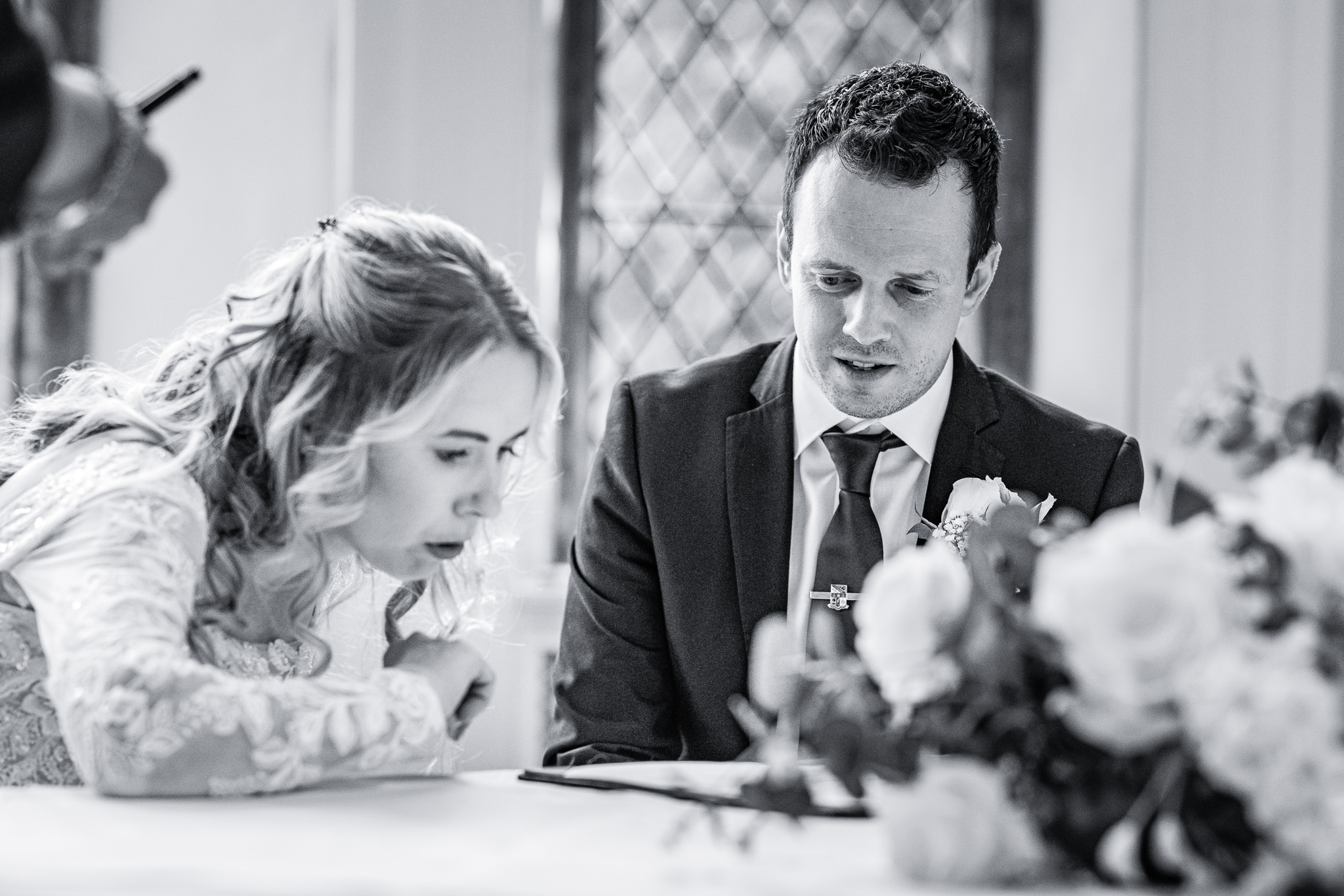
A wedding photography contract should tell you exactly what you are booking, when your date becomes secure and what happens if plans change. Here is what to check before you sign it.