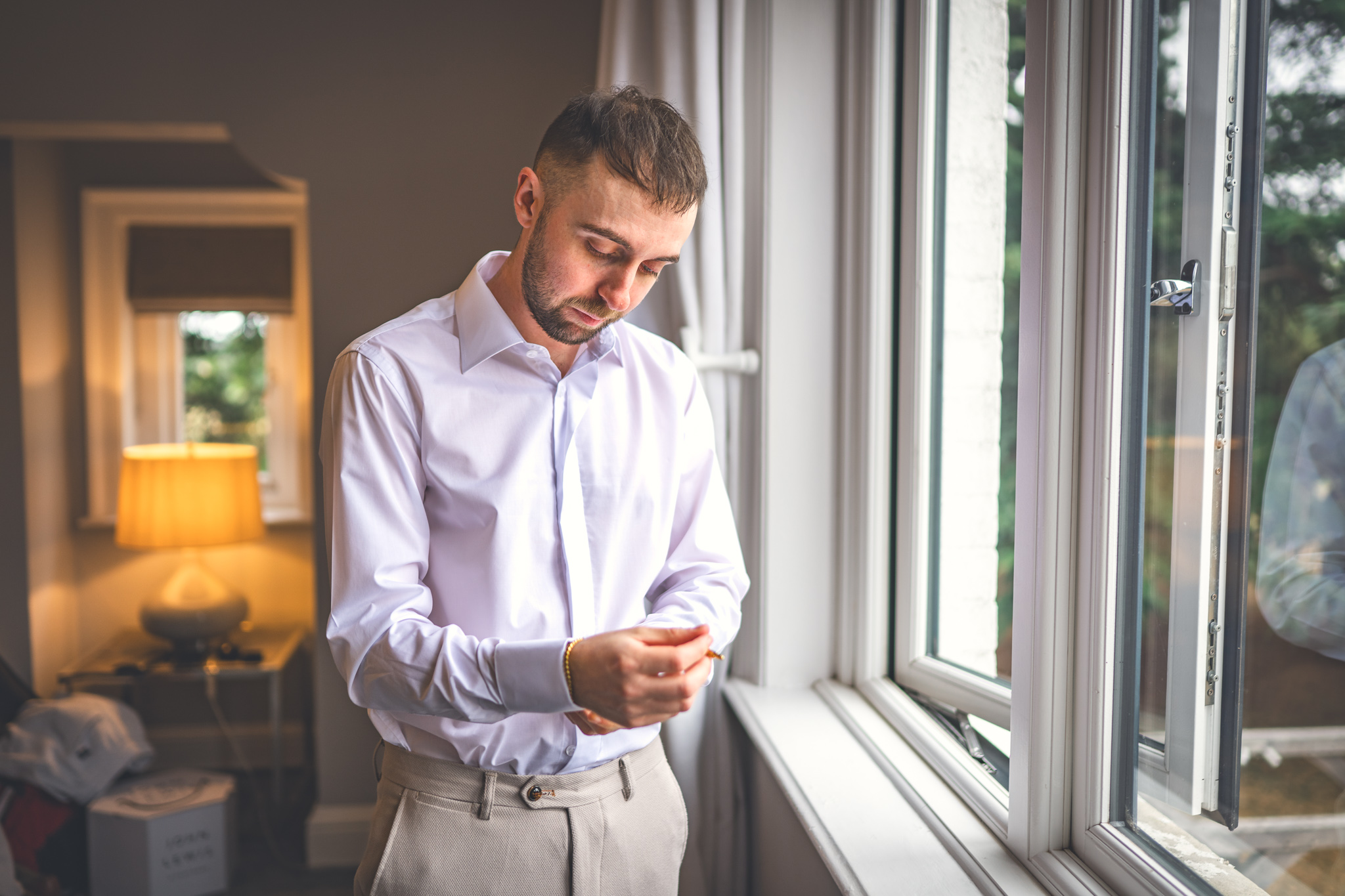
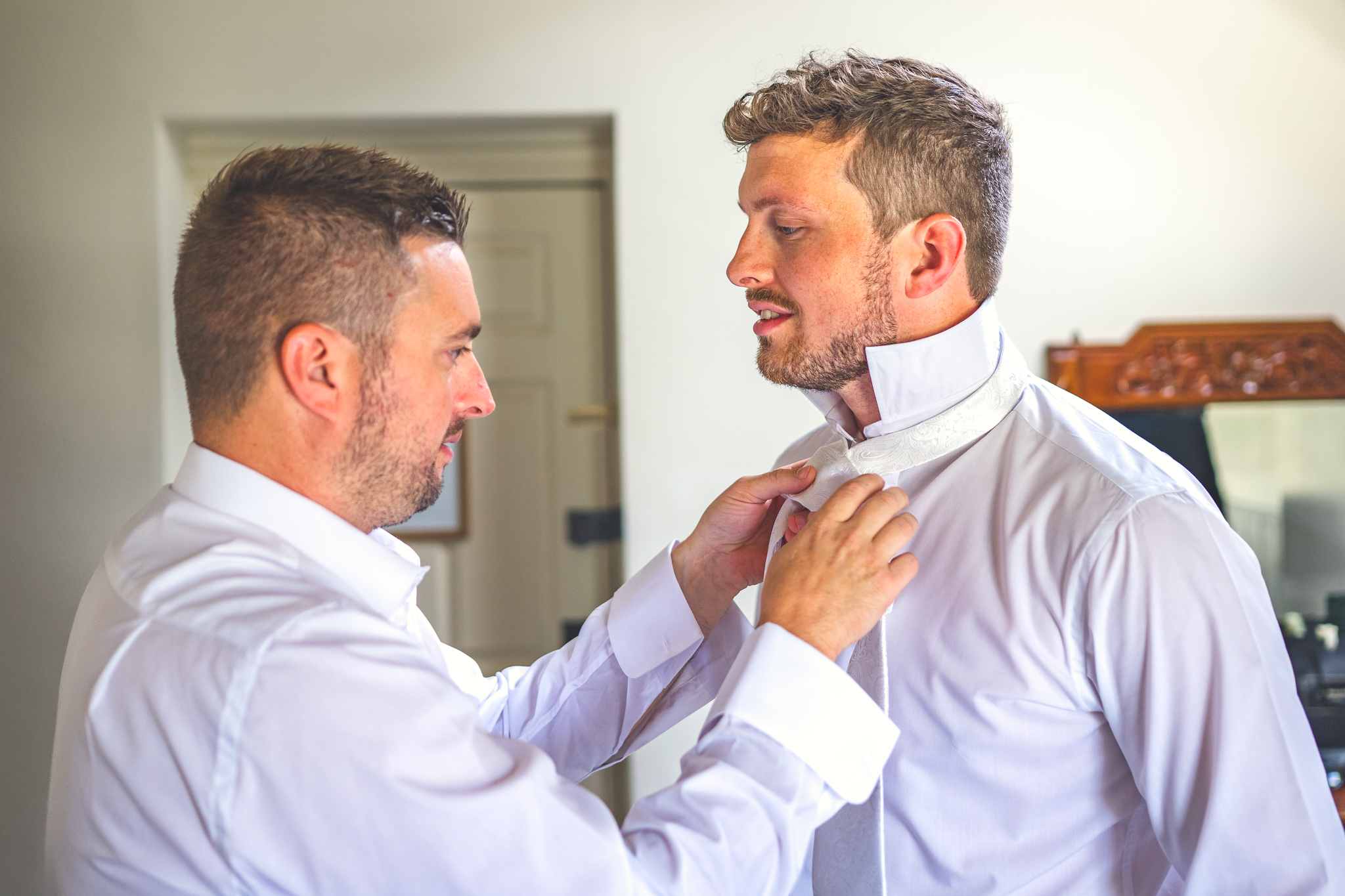
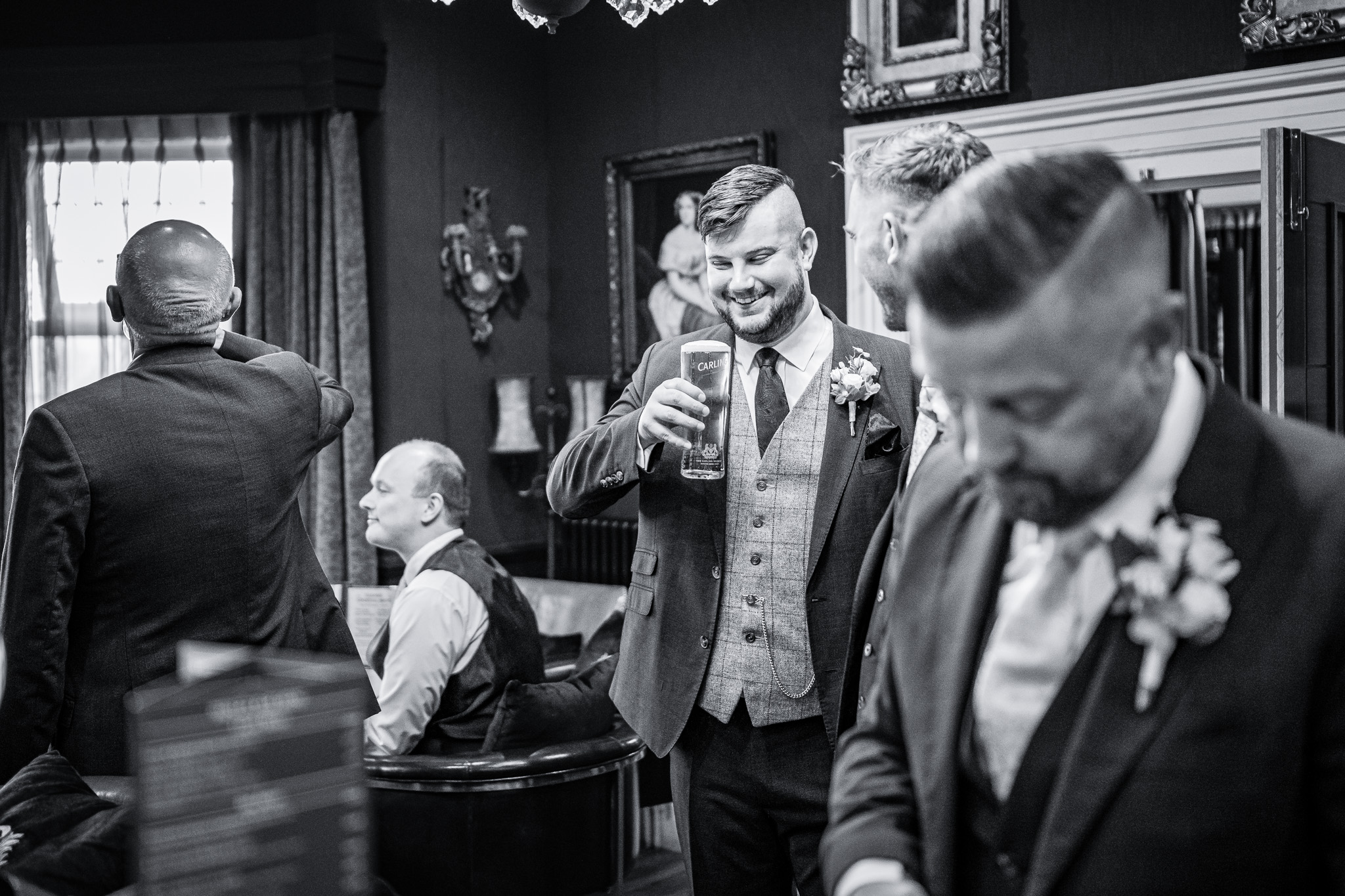
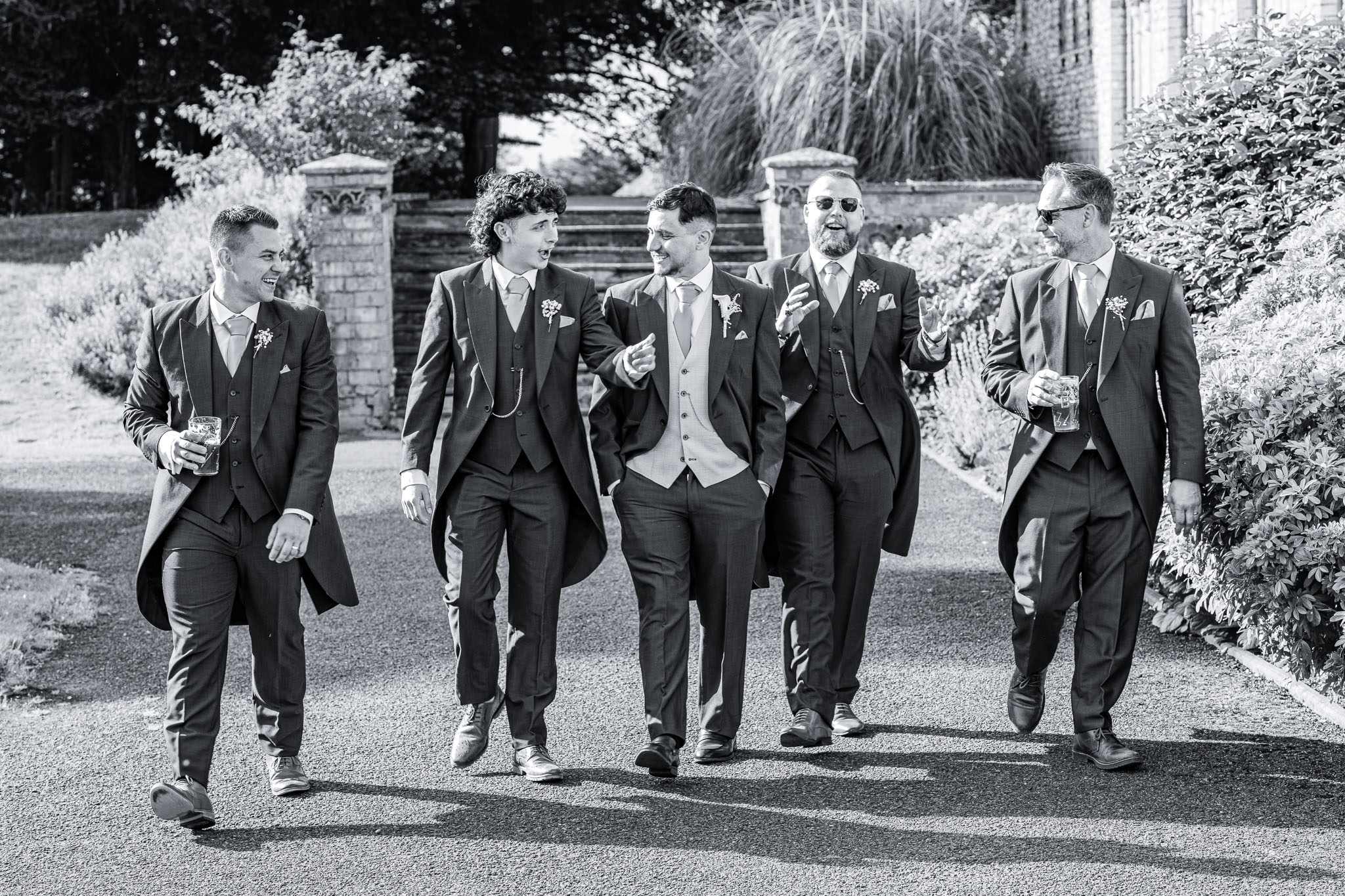
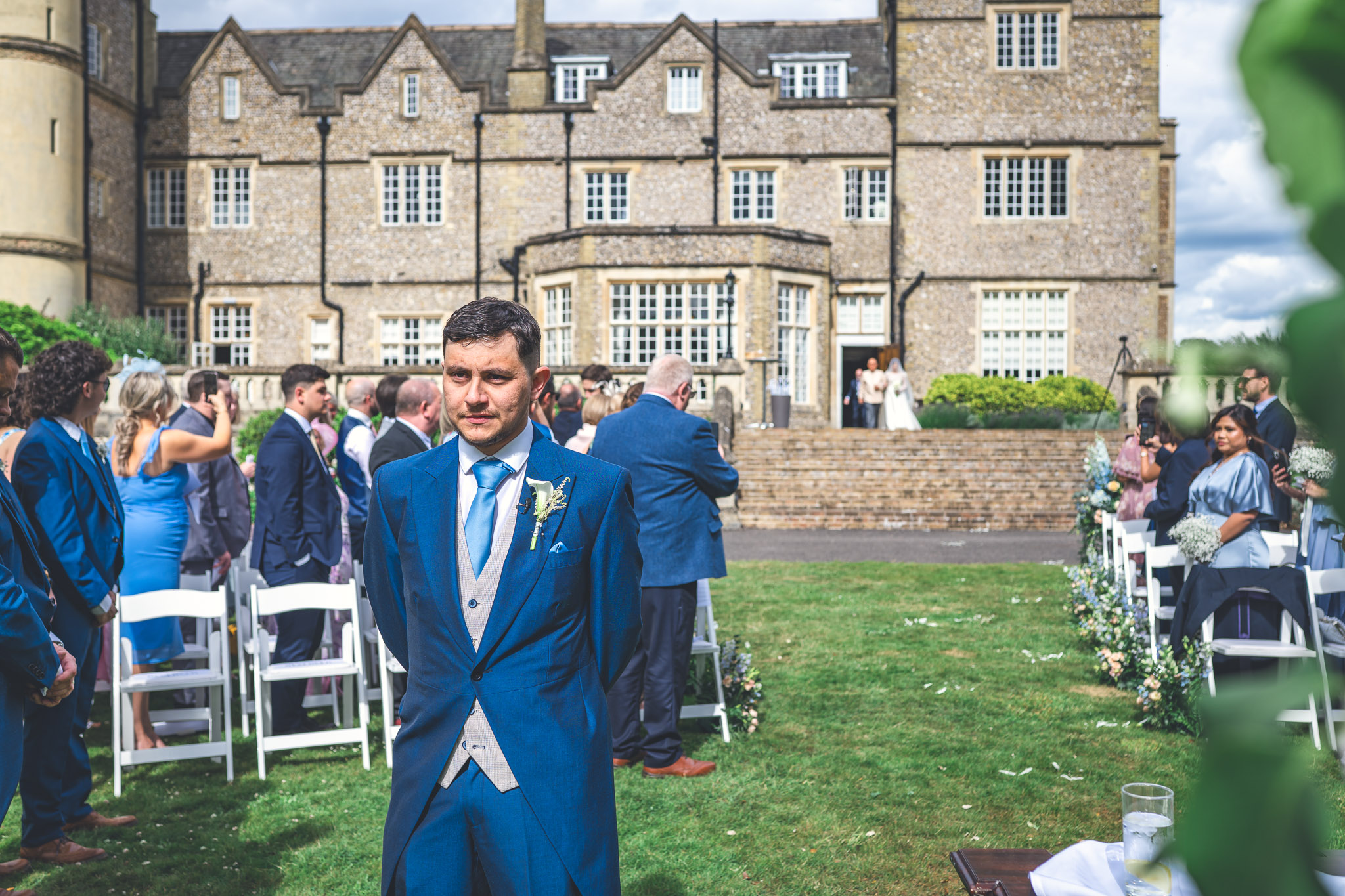
Groom preparation is often dismissed as ten minutes of putting on a suit. In practice, it gives the groom time to settle, get used to the photographer and preserve a part of the wedding that his partner never saw.
Wedding mornings are often treated as though one half of the couple is having the full wedding experience while the groom is somewhere nearby putting on a suit and waiting to be told when to leave.
After photographing more than 500 weddings, I can tell you that this is rarely what is actually happening.
Grooms get nervous. Their parents become emotional. Their closest friends attempt to help, usually with varying levels of competence. Letters and gifts are exchanged. Absent family members are remembered. An entire part of the wedding unfolds before anybody reaches the ceremony.
I am never going to force somebody through preparation coverage he does not want. I do, however, think the groom’s morning deserves to be considered before it is dismissed as unimportant.
Because it is his wedding too.
Groom preparation is not really about the photographs
That might sound like a strange thing for a photographer to say, but the biggest benefit happens before you ever receive your wedding gallery.
It gives us time to get used to one another.
Most people have never had a professional photographer around them for any length of time. If I first meet you at the ceremony, I am suddenly there with three cameras during one of the most nerve-racking moments of your life. Even if I work quietly, that can feel daunting.
Preparation gives us a gentler introduction. I learn who everybody is, understand the relationships within the group and work out how best to fit into the morning. You discover that I am not going to turn the day into a photoshoot or constantly ask you to perform for the camera.
Sometimes that involves dry humour, sarcasm and taking the piss out of one of your groomsmen. Twelve years in the military left me reasonably well trained in establishing myself among people I have never met and finding somebody suitable to become the target.
For clarity, that person is never the groom. It is his wedding day.
That approach does not work for everybody, though. Sometimes the groom needs a quieter presence, practical help or simply another calm person in the room. There is no standard routine. The important part is being able to read the people in front of me.
By the time you reach the ceremony, I am no longer a strange six-foot former soldier pointing a camera at you. I am James. I am the bloke who helped with your tie, sorted the buttonholes and took the piss out of your best man earlier that morning.
If being photographed is already worrying you, my guide to what actually helps when you feel awkward in wedding photos explains how I keep the rest of the day manageable too.
The important moments have very little to do with cufflinks
There will normally be photographs of ties, shoes, buttonholes and cufflinks because those things are part of what is happening. They are not usually the reason the coverage matters.
The most important photographs are often about relationships.
At a recent wedding, the groom wanted to visit the place where his father was buried before he got married. I quietly asked whether he would like me to go with him and photograph that part of the morning. He was surprised that I had offered, but he said yes.
His father could not physically attend the wedding, but the groom still made space to spend time with him that morning. He had a few quiet minutes to think and prepare himself before returning to the rest of the day.
The photographs did not make that moment important. They stopped an important moment from disappearing.
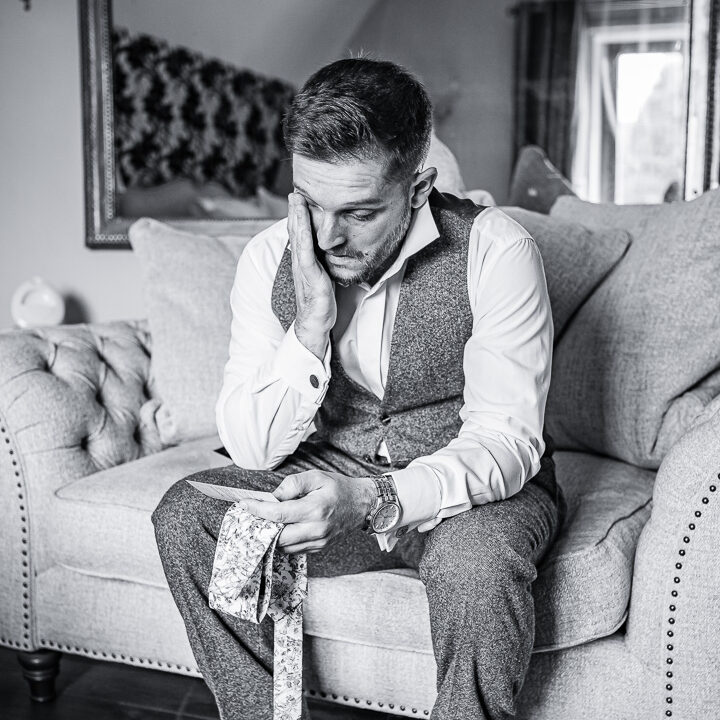
At Kurt and Josie’s Wootton Park wedding, Josie sent Kurt a handwritten letter and a keepsake containing a photograph of his uncle, whom he had been very close to. His reaction was completely uncontrolled. There was grief, gratitude and love for what Josie had done for him, all happening within the same few moments.
They became powerful documentary photographs, but their value goes beyond being good images. Kurt can return to that part of the morning and remember exactly how it felt. Josie can see an experience that happened while she was elsewhere getting ready.
Without groom preparation photos, that part of their wedding would simply be missing.
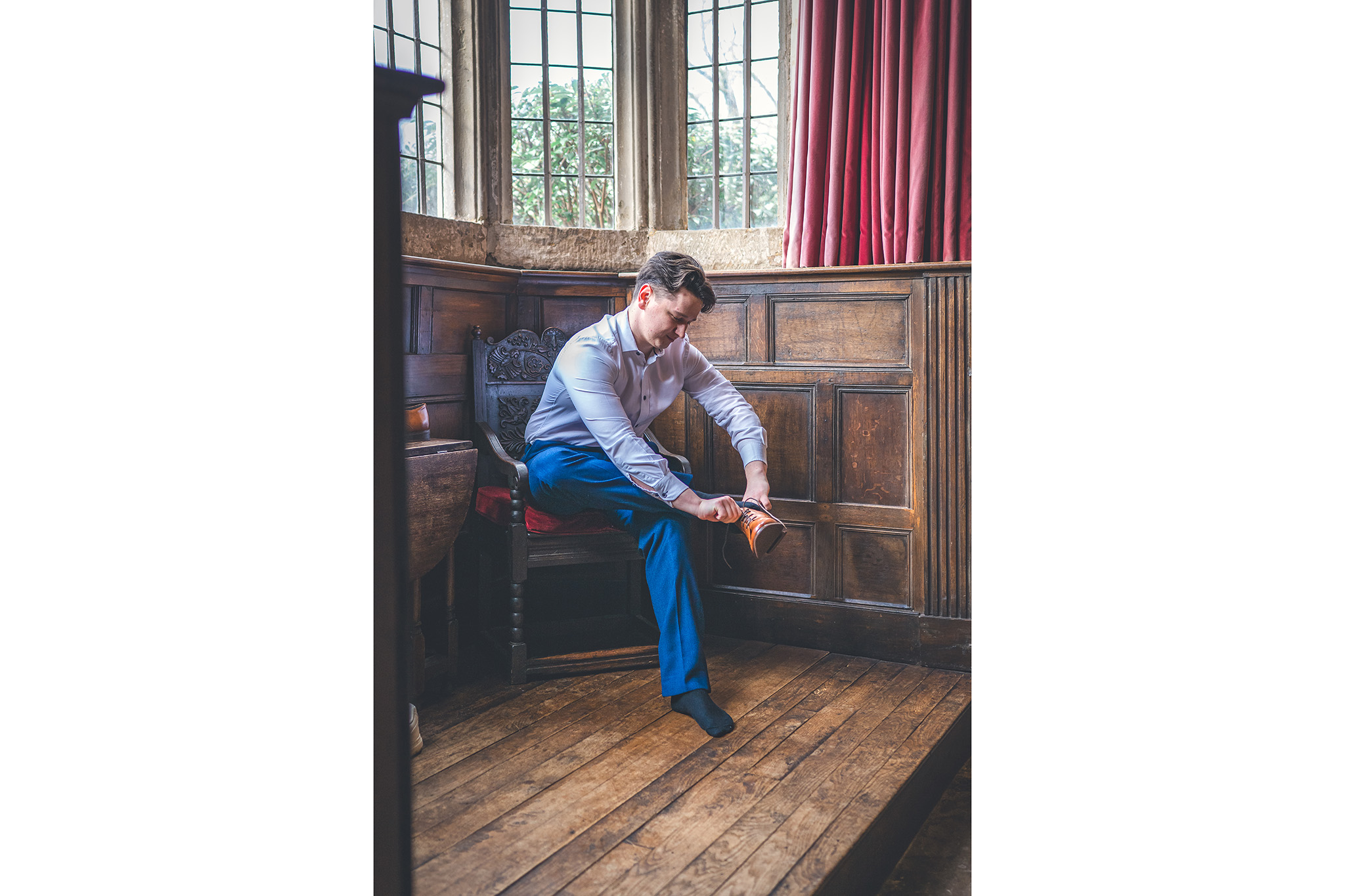
One groom whose wedding I delivered recently apparently said that he had not realised anybody could look so good while putting their shoes on.
That reaction is not unusual. Grooms often assume there is nothing particularly interesting or photogenic about them getting ready. Then they receive photographs of themselves looking relaxed, surrounded by the people closest to them and in better light than they realised was there.
My approach is natural, but that does not mean I leave you to get dressed in the darkest and most cluttered corner of the room. I might move you closer to a window or adjust where people are standing. Once the light works, I let you crack on.
I am not going to make you pretend to fasten the same cufflink six times.
I am also often useful before I take a photograph. Most men do not wear formal clothes regularly anymore, and there is a reasonable chance you have not worn a tie since school.
I have lost count of the number of wedding mornings where I have tied Windsor knots for half the room, fitted every buttonhole, folded pocket squares, helped with cufflinks and explained how a pocket-watch chain attaches. I also regularly remind people that the bottom button on a waistcoat is supposed to remain undone.
Six grown men can organise transport, accommodation and an entire stag weekend, then be completely defeated by a flower with a pin attached to it.
The speech is another common source of nerves. My advice is that a groom’s speech only really needs to do three things: thank everybody for coming, raise a glass to the people who cannot be there and tell the person you have married what they mean to you.
After more than 500 weddings, I have spent an alarming portion of my life listening to speeches. I have never heard anybody complain that the speeches were too short. When they go on for too long, somebody will always mention it.
If you are deciding where to place it in the timetable, my guide to whether wedding speeches should be before or after dinner explains what I have seen work best.
That practical help and reassurance build trust. I am not waiting silently in a corner for something photogenic to happen. I am another useful person in the room.
Most men can put on a suit in about six minutes. That does not mean the entire experience of getting ready for their wedding should be squeezed into ten.
I normally plan around an hour where the timetable allows it. That gives everybody time to get dressed without rushing, have a drink, settle into the morning and deal with whatever small problem inevitably appears.
Once you are ready, you can greet arriving guests, head to the church early or continue the ancient groom tradition of finding the nearest pub. The important thing is that you are not pulling a tie on at the last minute while somebody shouts that the car has arrived.
I do not spend that hour manufacturing 60 minutes of photographs of you fastening buttons. Much of it is simply time for us to talk and for everybody to become comfortable with me being there.
If an hour does not fit the morning, we can still achieve a great deal in 20 or 30 minutes. You can already be wearing your trousers and shirt when I arrive. We photograph the final details, head to the bar for a pint with your groomsmen, make a few relaxed group photographs and then move on.
This is not a Calvin Klein advert. I have no intention of photographing you spread across the bed in your pants.
At a summer wedding, there is also no sense in asking the groom to put on a three-piece suit five hours early. The timings should account for the weather, and my guide to planning a wedding in a British heatwave covers the wider practicalities.
The easiest arrangement is for both people to get ready at the venue or in accommodation nearby. Many exclusive-use venues have a separate room or space for the groom and his wedding party. If he arrives around 90 minutes before the ceremony, I can move between both sides of the morning as things happen.
The final hour will normally be weighted towards whichever preparation has more happening at once. Professional hair and makeup, a more complicated outfit, finishing touches and a departure can all come together quickly. My guide on whether to do your own wedding makeup explains why the makeup decision can affect far more than the finished look.
There is no universal timetable. The number of people getting ready, the amount happening that morning and the distance between locations all affect how much time I need.
The point at which groom preparation becomes impractical is when travelling starts removing more of the wedding than the extra coverage adds.
I once photographed a wedding where the couple were getting ready an hour apart. The church was another half-hour from one preparation location, and the reception venue was an hour from the church. I covered part of both mornings, but far too much of the day disappeared into driving.
Today, I would meet the groom earlier at the church or venue and spend meaningful time with him there. I would rather photograph things that are genuinely happening than lose several hours travelling for ten minutes of staged tie-adjusting.
If the distance makes both preparations genuinely impossible to cover, a second photographer may be worth discussing. For roughly 99 per cent of the weddings I photograph, sensible timings, nearby accommodation or having the groom arrive at the venue earlier make one photographer perfectly capable of covering both.
Groom preparation photos: common questions
What should we have ready for groom prep photos?
EXPAND
Keep the shoes, tie, cufflinks, pocket square, buttonhole and any meaningful letters or gifts together. You do not need to create a flat lay or stage the room for me. Having everything in one place simply stops the morning being delayed while six people search for one cufflink.
Does the groom need to be photographed getting fully dressed?
EXPAND
No. You can already be wearing your trousers and shirt when I arrive. We can photograph the final details, time with the people closest to you and a few relaxed portraits without documenting every stage of getting dressed.
Should the groom get ready at the wedding venue?
EXPAND
If the venue has suitable accommodation or a preparation room, it normally makes the coverage easier. Nearby accommodation also works well. The important factor is avoiding a long journey that removes useful photography time from the rest of the morning.
Do we need a second photographer for groom preparation?
EXPAND
Usually not. I can cover both preparations at most weddings when the locations and timings are sensible. A second photographer becomes worth discussing when the two preparations are too far apart to cover without sacrificing important parts of either morning.
Before you rule groom preparation out, talk to me
Groom preparation does not normally contain the same lengthy process as professional hair and makeup or getting into a complicated wedding outfit. That does not make the groom’s experience of the morning unimportant.
When I do not photograph it, it is normally because the groom has decided that he does not want it. If the collection already includes morning coverage, I do not charge an extra fee to spend some of that time with him. I will explain why I think it could be useful, but I will respect his decision.
At one wedding, I arrived to find the groom still in bed with a hangover. He did not want to get up and start preparing several hours before the ceremony, which was entirely understandable. I was not going to drag him out of bed for the sake of my planned timeline. We adapted and photographed a shorter version at the hotel later.
The wedding comes before the photographs. Groom preparation should make the morning better, not become another obligation to endure.
It might be 20 minutes of final details followed by a pint with your groomsmen. It could be a quiet conversation with your father, a walk with your son or time alone to gather your thoughts. It might involve a letter from your partner, a gift, an absent family member or nothing more dramatic than everybody laughing while attempting to work out a buttonhole.
The photographs will matter, and you may be pleasantly surprised by how good you look putting your shoes on. The bigger benefit is that you will reach the ceremony already knowing me and understanding how I work.
By then, I am not the photographer who has suddenly appeared at the end of the aisle. I am James, and you know that your wedding is not about to become my photoshoot.
So, before ruling groom preparation out, tell me about your wedding. You might be surprised by what we can achieve without taking over the morning.